
In short: A Jim’s Handyman New Zealand franchise gives skilled builders and practical tradies a structured way to build their own customer base instead of relying only on job sites, bosses, or cold-start marketing. Robert Young explains how fixed fees, controllable leads, local territories, and repeat customers help franchisees build a more resilient property maintenance business.
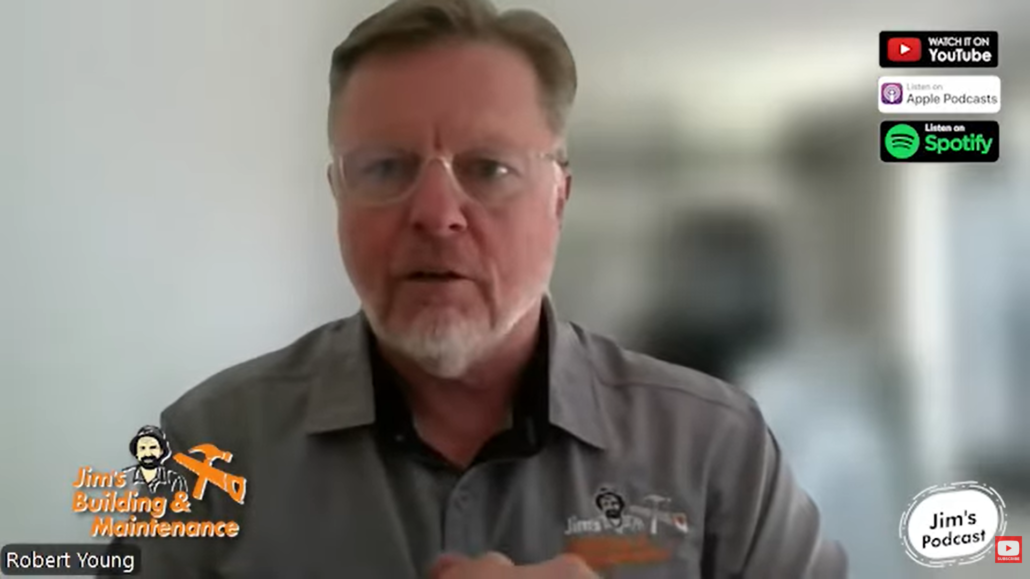
In a Jim’s Podcast episode, Robert Young explains how Jim’s Building and Maintenance / Jim’s Handyman New Zealand supports skilled builders in markets such as Auckland, Wellington, Christchurch, Mount Wellington, and Massey. Robert moved from more than 30 years in sales and marketing into supporting franchisees, and now uses systems such as the Jimbo app, fixed-fee lead control, the Jim’s handset, and local property maintenance marketing to help franchisees build customer-owned businesses.
A Jim’s Handyman New Zealand franchise gives skilled builders and practical tradies a structured way to build a local property maintenance business without starting from zero. Robert says the division has been operating in New Zealand for five years, with strong demand in Auckland, Wellington, and Christchurch. This article covers how the model works, why property maintenance stayed busy during a downturn, and what builders should know before joining Jim’s Group.
Watch the full episode below, or keep reading for the key takeaways.
Why Are Builders Moving Into A Jim’s Handyman New Zealand Franchise?
Robert Young says many builders come to Jim’s Handyman New Zealand because they are tired of the pressure that comes with working for someone else.
He talks about builders being sick of the same site for months, 7 am starts, a boss watching the clock, and the same tasks all day. For those builders, the professional pivot is not about leaving trade work behind. It is about using those trade skills in a business they can control.
Robert brought Jim’s Building and Maintenance/Jim’s Handyman to New Zealand five years ago. He says the division now has strong positions in Auckland, Wellington, and Christchurch, with the regions becoming the next focus.
The frustration he sees is simple. Independent builders often have to generate every lead themselves. Employed builders may have steady wages but little control. And builders in a slow market can feel exposed when renovation work dries up.
Robert’s answer is customer ownership.
He says the way to secure your future is to build a base of about 1,000 customers who know you. That gives a franchisee repeat and referral work, not just one-off jobs.
Jim’s solves the problem by giving skilled builders access to a known brand, a lead system, fixed fees, franchisee training, support, and a structure that lets them invoice customers directly. For builders comparing options, the starting point is understanding how owning a Jim’s franchise works.
How Does Jim’s Handyman New Zealand Help Franchisees Build Repeat Customers?
Robert explains that franchisees can manage leads through their Jim’s handset, use the Jimbo app to organise customers, and turn leads on or off in real time. This matters because the franchisee is not just chasing jobs. They are building a customer database that they can work, grow, and eventually sell.
The commercial science behind this system is simple: the first job creates trust, and trust creates repeat work.
Robert gives the example of fixing a window latch, then later building a $40,000 deck for the same customer. That first job may look small, but the real value comes when the customer knows the franchisee, trusts the work, and calls back.
This outperforms standard marketplace leads because the Jim’s lead is not sent to five to 10 competing tradies. Robert says when Jim’s creates a lead, the franchisee is the only one getting it. That avoids the race to the bottom that often happens on lead aggregator platforms.
This system suits Australian and New Zealand property conditions because maintenance work is local, recurring, and often urgent. Leaky windows, roof repairs, gutter repairs, gutter replacements, and internal-to-external gutter conversions cannot be delayed forever. Robert compares it to dentistry: the longer people wait, the more it costs.
Pro Tips:
- Log every customer properly in the Jimbo app so future enquiries return to the right franchisee.
- Turn leads off when booked out, especially after large jobs such as 600 metres of fencing.
- Keep your service area tight as your customer base grows, because Robert says many franchisees work within about 20 minutes of home.
What Support Do Jim’s Handyman Franchisees Get In New Zealand?
The Jim’s system advantage is that franchisees do not need to build every part of the business from scratch.
Robert says when someone joins, “it’s like having a business that’s already been open for many years.” That comes from the brand, the call centre, the marketing, the lead system, the training, and the support from existing franchisees.
The fixed-fee model matters. Robert explains that Jim’s does not take a percentage of each job. A builder doing $100,000 in revenue or a million dollars in revenue pays the same fixed structure if they are taking the same lead volume.
That is why learning how Jim’s franchising fees work matters before comparing franchise models. Robert warns against systems where the franchisor invoices the customer, controls the cash flow, then pays the operator the remaining 90% or 95%.
Jim’s franchisees invoice customers directly. That customer belongs to the franchisee. If the same customer calls back 10 years later, Robert says the system sends them back to the original franchisee.
Training also plays a big role. Robert says prospects speak to him, meet existing franchisees, then complete two days of induction training before signing. That gives prospects time to understand the model before committing.
The lead system also protects both the customer and the franchisee. When Jim Penman, founder of Jim’s Group, introduced lead fees around 20 to 25 years ago, complaints pretty much halved overnight because franchisees only accepted work they wanted and tried harder to win the customer.
For people comparing franchise options, franchisee training and how much you can earn with a Jim’s franchise are key areas to review before deciding.

Why Does Local Property Maintenance Work So Well In New Zealand?
Local expertise matters because property maintenance changes by suburb, housing type, and weather conditions.
In Auckland, Robert says only two territories were available at the time of the podcast: Takapuna/Devonport and the Te Ataus. He says Auckland has 35 territories, but he will only ever sell a maximum of 25. That scarcity is designed to protect the value of each local business.
In Wellington, Robert says there are 15 territories from the Hutt up to Levin, but he will only ever sell 10. At the time of the interview, he had four franchisees and wanted another six.
That local structure helps the brand become hard to miss in key areas. Robert says that when the Wellington team reaches 10 franchisees, people needing property maintenance in Wellington will not be able to avoid the brand.
The work also reflects local homes. Robert mentions leaky windows, roof repairs, gutter repairs, gutter replacements, and internal-to-external gutter conversions. In wet climates, poor water control can create expensive damage. That makes maintenance work less optional than cosmetic renovation work.
He also points to regional opportunities. In New Plymouth, he says only two people can go in. In Rotorua, he gives the example of one person becoming Jim’s Handyman Rotorua.
For customers, local expertise means dealing with someone who knows the area. For franchisees, it means building a database of nearby customers, cutting travel time, and creating repeat work close to home.
How Do Fixed Fees, Leads And Territories Work At Jim’s Handyman NZ?
Robert makes three points clear: fixed fees protect cash flow, leads help build customers, and territory is a home base rather than a cage.
The fixed-fee model means franchisees are not paying a percentage of every job. Robert says fees can be thought of as a couple of hundred dollars a week. Once those fees are covered, the rest of the week belongs to the franchisee.
Lead fees are also controlled. Robert says some leads are $22, and the maximum is $35 in New Zealand. He also says the cost to generate a lead reached $36 at one point during the recession.
The goal is not to depend on leads forever. Robert says repeat and referral work usually starts coming in strongly after about 18 months to 24 months. At that point, leads become a tool for growth rather than the only source of work.
Territory works differently from what many people expect. Robert says your territory gives you the first right of refusal on local leads, but your real territory is your customer base.
If a customer is in your database, they are your customer. If they call the 0800 number years later, the system can send them back to you. If you generate a referral outside your area, Robert says that the customer still belongs to you.
That is a major difference from systems that restrict where a franchisee can work.
How Does Jim’s Handyman Compare With A Standard Independent Contractor?
| Feature | Standard Independent Contractor | Jim’s Professional Standard |
| Lead Generation | Must create leads alone, often through paid ads, agencies, or marketplaces | Access to Jim’s lead system, call centre, local marketing, and brand recognition |
| Customer Ownership | Customer details may be scattered across phones, notebooks, or invoices | Customers are organised through systems such as the Jimbo app |
| Pricing Pressure | Often competes with five to 10 other tradies on marketplace platforms | Receives direct Jim’s enquiries where customers ask for a Jim’s professional |
| Business Structure | Must build systems, quoting process, and marketing from scratch | Uses fixed fees, training, support, controllable leads, and franchise structure |
| Exit Value | Businesses may rely mainly on the owner’s labour and informal relationships | Customer database, brand system, and repeat work can make the business easier to sell |
“The way to secure your future is to have a thousand of your own customers that know you.”
– Robert Young, Jim’s Handyman franchisor in New Zealand
FAQ: Jim’s Handyman New Zealand Franchise For Builders
A Jim’s Handyman New Zealand franchise is a property maintenance business backed by Jim’s Group systems, branding, training, and lead generation. Robert Young says the New Zealand division includes Jim’s Building and Maintenance for qualified builders and Jim’s Handyman for people who are truly handy.
Robert says the Jim’s Building and Maintenance brand is for currently qualified builders. People who are not qualified builders may fit Jim’s Handyman if they have strong practical skills and access to an LBP, or licensed building practitioner, as a subcontractor.
No. Robert explains that Jim’s uses fixed fees rather than taking a percentage of each job. The franchisee invoices the customer directly, which helps keep customer ownership with the franchisee.
Robert says some leads are $22, and the maximum is $35 in New Zealand. He also says the cost to generate a lead reached $36 during the recession, which shows why lead generation has a real cost.
Yes. Robert says franchisees can turn leads on or off using their Jim’s handset. If a franchisee wins a large job, such as 600 metres of fencing, they can turn leads off while booked out.
Robert says repeat and referral work usually starts coming in nicely after about 18 months to 24 months. The long-term goal is to build a customer base that brings work back without relying only on new leads.
The pay-for-work guarantee is a safety net that helps new franchisees build momentum. Robert says it is managed monthly and requires the franchisee to complete business-building tasks such as quotes, local outreach, and free service activity.
Yes. Robert says territory gives the franchisee the first right of refusal on local leads, but the real territory is the customer base. If a franchisee wins a customer outside their area, that customer can still belong to them.
Key Takeaways
- Robert Young brought Jim’s Building and Maintenance/Jim’s Handyman to New Zealand five years ago.
- Property maintenance stayed busy during the downturn because work such as leaky windows, roof repairs, and gutters cannot be delayed forever.
- Fixed fees help franchisees keep control of customer ownership and cash flow.
- Robert says repeat and referral work usually builds strongly after 18 months to 24 months.
- The goal is to build about 1,000 good customers, not just chase one-off jobs.
Build Or Book With Jim’s Handyman New Zealand
Book Local Property Maintenance With Jim’s Professional Standards
If you need help with local property maintenance, Jim’s Handyman gives customers access to professional standards, known systems, and the backing of the Jim’s National Guarantee.
A local Jim’s professional can help with practical repair and maintenance work, from smaller fixes through to larger property jobs, depending on the division and local availability.
Request your free quote from Jim’s Handyman today.
Build A Local Handyman Business With The Jim’s System
Robert Young’s story shows why a Jim’s Handyman New Zealand franchise can suit skilled builders and practical tradies who want more control, stronger marketing, and a real customer base.
Learn more about joining Jim’s Group at jims.co.nz or call 800 454 654 today.