
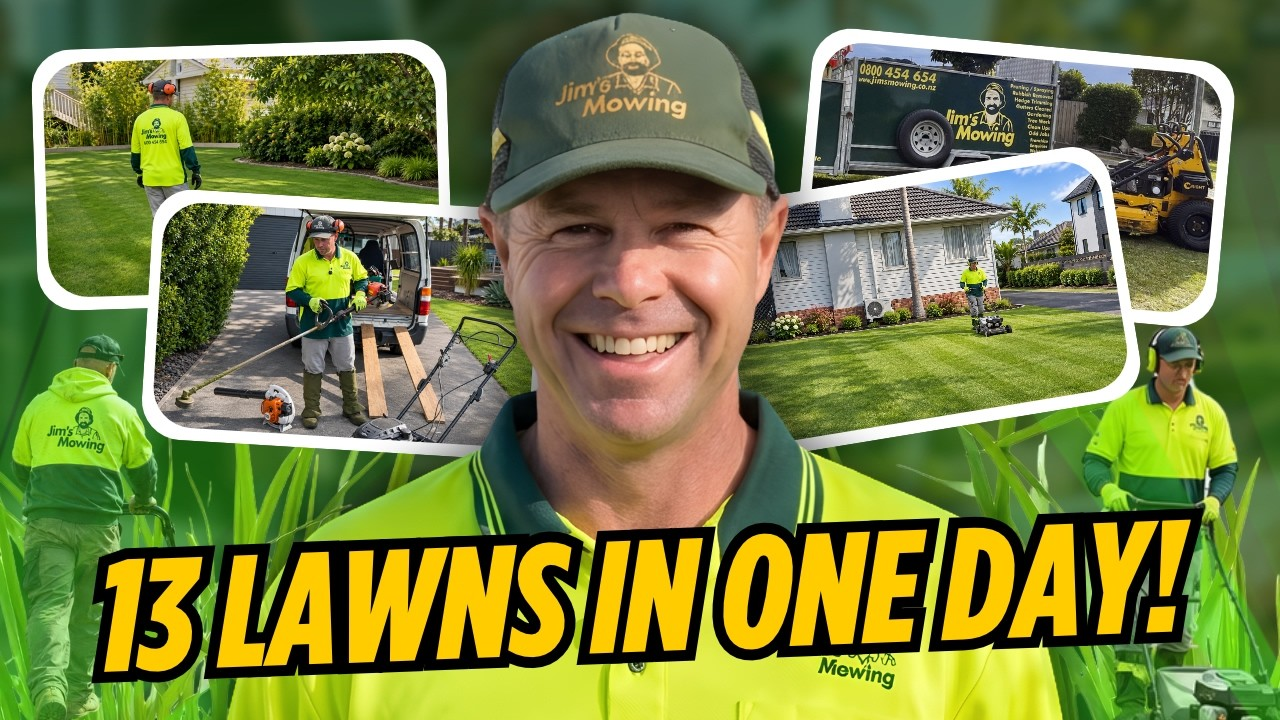
Jim’s Mowing franchisee Ryan Butler completed 13 lawns and reported $938.86 in turnover during one working day in Auckland. The key to fitting that many jobs into his schedule was building a tightly organised mowing run, with most customers located just minutes apart.
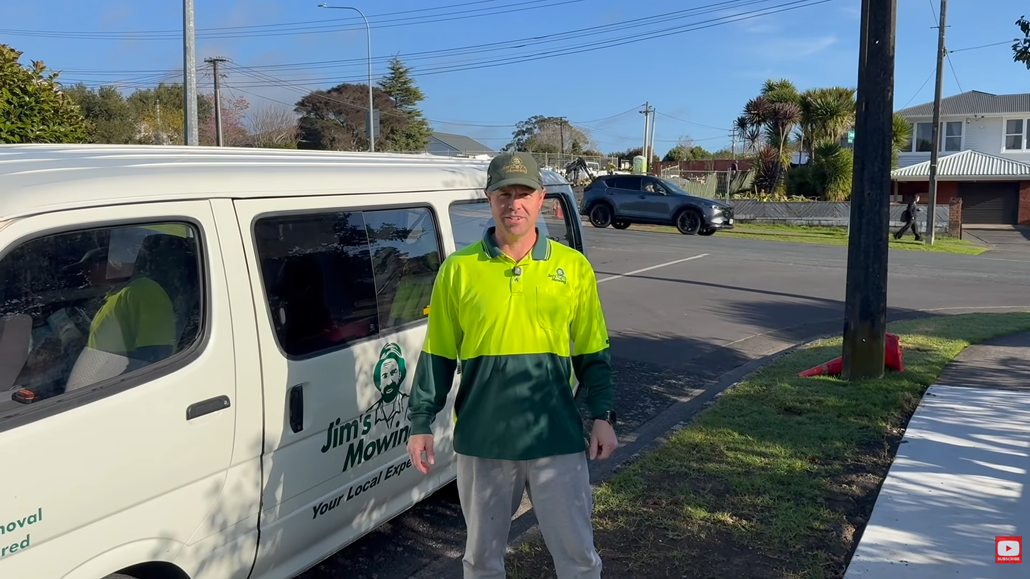
Operating in Te Atatū Peninsula, Ryan had been with Jim’s Mowing for nearly two years when the interview was recorded.
He took interviewer Ricky along for the day to demonstrate the equipment, customer service, scheduling, and practical decisions involved in running his business.
The result was a close look at how a Jim’s Mowing franchisee manages a busy day on the road.
0:00 — Ryan Butler’s Introduction and Mowing Equipment
2:55 — Building an Efficient Mowing Run
3:38 — Lawn Pricing and Property Maintenance
7:14 — Petrol Versus Battery-Powered Equipment
10:56 — Catch Mowing and Job Pricing
11:33 — Responding to New Customer Enquiries
15:29 — Finding Additional Gardening Work
15:59 — Turning a Three-Star Rating Into Five Stars
21:25 — Lessons From an Underquoted Lawn
23:35 — Managing Mowing Work in Wet Weather
27:09 — Completing 13 Lawns and Calculating Turnover
28:17 — Route Efficiency and Business Growth
29:21 — What Happens During a Franchise Observation Day
How Much Can a Jim’s Mowing Franchisee Turn Over in One Day?
Ryan reported $938.86 in turnover after completing 13 lawns during the filmed working day.
He and Ricky started at approximately 8:30 am and finished shortly after 4:00 pm.
They had originally planned to complete around 14 lawns, but filming slowed their progress.
At the end of the day, Ryan confirmed the turnover figure as “$938.86“, while Ricky described it as a solid result.
Ryan also believed they could have passed $1,000 if they had completed the final scheduled lawn.
However, this was one day’s turnover, not profit or a guaranteed daily earning amount.
The figure does not account for fuel, equipment, maintenance, franchise fees, insurance, tax or other business expenses.
What makes the result particularly interesting is how Ryan organised his work.
Rather than spending long periods driving between customers, he had concentrated most of his mowing jobs within a relatively small area.
That allowed him to spend more of the day working on properties.
How Does Ryan Butler Fit 13 Lawns Into One Working Day?
Ryan fits more lawns into his working day by scheduling customers close together and reducing unnecessary travel.
At the time of filming, he estimated that approximately 80% of his business was within his Te Atatū Peninsula territory.
He had spent around six months reducing the number of customers outside his preferred working area.
Earlier in his business, he accepted jobs across a much wider region.
Some customers were approximately 30 minutes away, even when the mowing job was worth only $60.
Ryan explained that this made the work inefficient, particularly for smaller lawns.
As his business developed, he focused on concentrating regular customers within his territory.
During the filmed day, some properties were only one or two minutes apart. Others were even closer.
Ryan summarised the advantage simply: “The less time you can spend in the van and the more time mowing, the better.“
This approach is known as route density.
For a mowing business, it means arranging regular jobs close enough together to reduce travel time, fuel use and gaps between appointments.
Ryan’s experience also shows that an efficient schedule takes time to develop.
He did not start with a tightly packed run. He built it gradually by changing where he accepted new work.
What Equipment Does Ryan Use for His Jim’s Mowing Jobs?
Ryan uses a combination of mowing, trimming, and blowing equipment to complete his regular lawn maintenance work.
His main mower is a Victa Mulch Master, which he says he uses on approximately 90% of his lawns.
The mower cuts grass into smaller pieces and distributes the clippings across the lawn.
Ryan prefers this approach for many of the Kikuyu lawns he maintains around Auckland.
He also uses a lightweight line trimmer for edging and areas that cannot be reached easily with a mower.
For clearing leaves and grass clippings, he uses a Stihl vacuum blower, although he generally operates it as a blower rather than using its vacuum function.
Ryan has also experimented with battery-powered equipment.
He was particularly impressed with electric pruning snips and smaller cutting tools.
However, he had not fully moved away from petrol equipment at the time of filming.
He explained that battery charging and the performance of his existing mower were important considerations.
For Ryan, the decision comes down to selecting tools that suit the work rather than changing equipment simply because newer options are available.
How Does Ryan Price Different Lawn Mowing Jobs?
Ryan considers the time required, lawn condition, and type of service when discussing his mowing prices.
During the interview, he shares several examples from his regular customer run.
| Service | Price | Time |
| Regular lawn mowing | $90 | 30 minutes |
| Catch mowing | $70 | 30–35 minutes |
| Medium-sized lawn | $85 | Not specified |
| Front and back lawn | $75 | Not specified |
For the $90 lawn, Ryan explains that he typically spends around 30 minutes completing the work.
That includes trimming the edges, mowing the lawn, and tidying the property.
He also adjusts his mowing technique depending on the grass condition.
For example, he chooses a higher mower setting when the lawn has grown longer or is recovering from winter.
Ryan also makes a point of clearing loose debris from driveways where practical.
Although this may not be part of the original scope, he sees it as an opportunity to leave the property looking better for the customer.
His approach combines job efficiency with attention to detail.
How Does a Jim’s Mowing Franchisee Handle New Customer Enquiries?
Ryan follows up new customer enquiries by telephone, confirms the type of work required and arranges a suitable time to inspect the property.
During the filmed day, a new mowing enquiry comes through while he is between jobs.
Ryan calls the prospective customer and asks whether they want mulch mowing or catch mowing.
He explains that catch mowing may involve an additional cost.
He also checks whether the customer wants a one-off service or regular lawn maintenance.
Before finishing the call, he asks whether any gardening work is required.
Because Ryan is already working in the customer’s area, he can offer a visit between 2 pm and 4 pm.
He also tells the customer that he will send a text approximately 30 minutes before arriving.
This short conversation demonstrates several important parts of his customer service process.
Ryan clarifies the work before quoting, checks for related services and provides a clear appointment window.
It also shows another advantage of having customers concentrated within his territory.
New enquiries can sometimes be fitted around existing work without significant additional travel.
How Does Ryan Find Additional Gardening Work From Existing Customers?
Ryan identifies additional gardening opportunities while maintaining customers’ lawns, then discusses those jobs when the timing is suitable.
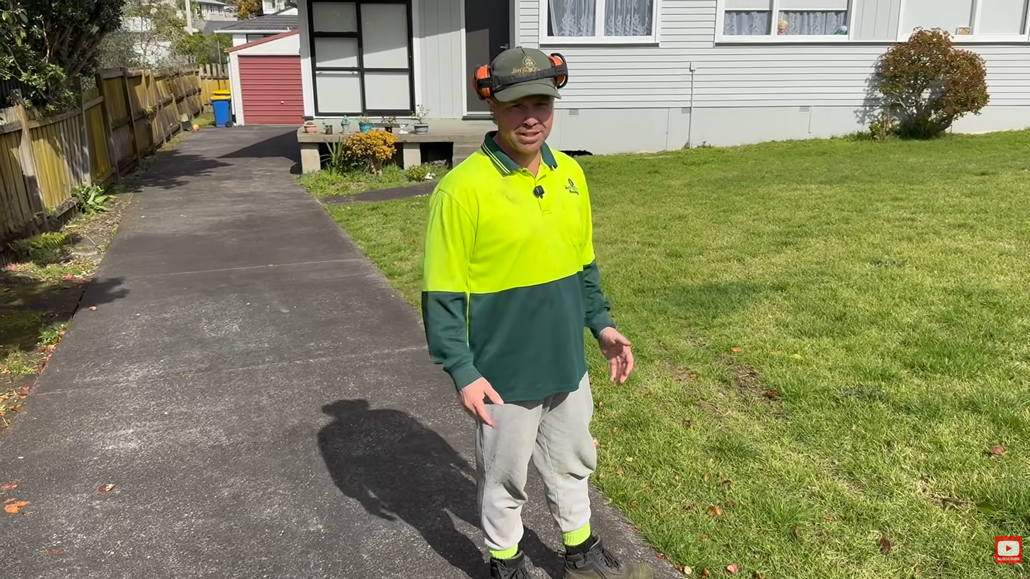
During one property visit, he points out several areas that could benefit from attention.
These include overgrown hedges, weeds, fallen palm fronds, tired lawn areas, and plants spreading into unwanted spaces.
Ricky estimates that the property could contain another 500–600 worth of gardening work.
Ryan agrees that the additional work could be valuable.
Rather than immediately pushing every service, he explains that he keeps track of potential jobs and raises them when his schedule has room.
For example, he might suggest hedge trimming, weeding or garden tidying during a quieter period.
Some hedges may only need attention every three to six months.
That gives Ryan opportunities to provide ongoing gardening services alongside regular mowing.
At the end of the interview, Ryan explains that gardening has become a major part of his business.
He considers gardening more lucrative than mowing in his own circumstances, although he enjoys having a balance between the two.
His experience shows how regular lawn maintenance can help build longer-term customer relationships and lead to other work on the same property.
How Did Ryan Turn a Three-Star Customer Rating Into Five Stars?
Ryan improved a customer’s three-star rating by completing the gardening work the customer had been expecting and following through on the agreed service.
The situation began when Ricky contacted Ryan about a three-star review.
Ryan was surprised because he believed he had completed the lawn mowing properly.
When he called the customer, he discovered the issue.
The customer had expected both lawn mowing and garden tidying.
Ryan had scheduled the gardening work for the following week, but the customer was waiting for the full job to be completed before giving a higher rating.
Ryan returned and completed the garden tidy, including hedge work.
The customer subsequently changed the rating to five stars.
More importantly, the experience developed into an ongoing customer relationship.
Ryan continued maintaining the lawn and completing gardening work at the property.
He explained that the customer had become one of his favourites because of the relationship they had developed.
The example highlights the importance of clear expectations, completing agreed work and responding constructively to feedback.
For Ryan, a difficult customer experience eventually became an opportunity to strengthen trust.
What Happens When a Lawn Mowing Job Is Underquoted?
Ryan’s experience with an overgrown property shows why quoting accurately matters, particularly when the lawn requires more work than a standard maintenance visit.
When he first inspected the property, the grass was approximately waist-high.
He initially quoted around 150–175 to cut it down.
However, once he started using his brush cutter, he realised he had underestimated the amount of work involved.
The initial cutting and mulch mowing took approximately three hours.
Ryan then identified another problem.
The cut grass had left a large amount of material sitting on the lawn.
He discussed the additional catch mowing and green waste removal with the customer and charged another $225.
The entire job took approximately four hours.
Even with the additional charge, Ryan described the result as only almost profitable.
The experience illustrates the importance of assessing heavily overgrown lawns carefully before agreeing on a price.
It also shows why a one-off lawn restoration job may need a different scope from regular mowing.
Once the property was brought under control, Ryan could maintain it more efficiently during future visits.
How Does Ryan Manage Lawn Mowing During Bad Weather?
Ryan manages wet weather by adjusting his schedule, postponing unsuitable mowing jobs, and completing gardening or administrative work when conditions allow.
Auckland’s changing weather is a regular consideration for his business.
If heavy rain makes a lawn unsuitable for mowing, he may postpone the visit and reschedule the customer.
During lighter rain, he may continue working if the ground conditions are suitable.
For very wet lawns, he sometimes offers line trimming as an alternative, provided the customer agrees.
Ryan also uses rainy periods to complete other jobs.
Weeding and certain gardening tasks can sometimes be carried out when mowing is not practical.
He may also bring forward hedge maintenance or gardening work that customers have previously discussed with him.
When outdoor work is not suitable, he can service equipment, catch up on bookkeeping or organise upcoming jobs.
His approach is based on flexibility rather than expecting every day to follow the original schedule.
He also recognises that outdoor work requires adapting to both wet and hot conditions.
Can Jim’s Mowing Franchisees Balance Business Ownership With Family Life?
Ryan’s working routine allows him to spend time with his daughter in the morning before starting his jobs.
During the interview, he explains that taking his daughter to kindergarten is an important part of his day.
He values that time together and organises his work around it.
Although he recognises the advantages of quieter battery-powered equipment for early morning jobs, he does not necessarily want to start work as early as possible.
His existing routine gives him time for his family while still maintaining a busy schedule.
This does not mean every Jim’s Mowing franchisee works the same hours.
Ryan’s arrangement reflects the business and customer base he has built.
It provides a practical example of how an owner can make scheduling decisions around personal priorities.
What Can Prospective Jim’s Mowing Franchisees Learn From an Observation Day?
An observation day gives prospective franchisees an opportunity to see the physical work, equipment, and customer interactions involved in running a mowing business.
At the end of the video, Ricky explains that the filmed day is similar to the experience a prospective franchisee might have when accompanying an existing operator.
He says observation days generally involve spending at least five hours with a franchisee.
During that time, prospective owners can ask questions, inspect equipment, and see how work is completed on actual properties.
Ryan’s day demonstrates why that experience can be useful.
The work involves more than mowing lawns.
It includes route planning, customer communication, quoting, equipment maintenance, gardening, weather decisions, and physical labour.
Prospective owners can also learn from Ryan’s early mistakes, including travelling too far between jobs and underestimating the time required for difficult properties.
For those researching whether a franchise is worth it, spending time with an existing operator can provide a clearer understanding of the day-to-day responsibilities.
Explore a Jim’s Mowing Franchise
Ryan Butler’s experience shows how efficient scheduling, reliable customer service and regular gardening work can contribute to a well-organised mowing business.
His 13-lawn day offers a practical look at the work involved, including the challenges of quoting, changing weather and maintaining customer relationships.
For anyone considering business ownership, the full interview is a useful starting point.
To learn more about Jim’s Mowing franchise opportunities or arrange an observation day, contact Jim’s Group on 0800 454 654.